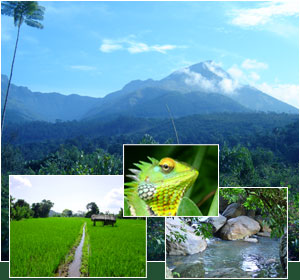
Sri Lanka

Welcome to Sri Tours ! Experience made to inspire

COME AS A GUEST & LIVE AS A FRIEND
We are doing a family business and therefore we can offer you a family atmosphere with personalized travel plans. I come from famous Sri Lankan tourist area called Unawatuna and now I’m living in Germany for more than 5 years. My experiance will help you to find a good accomodation with wide range of offers at minimum costs, to provide a stress free relax and enjoyble vacation.
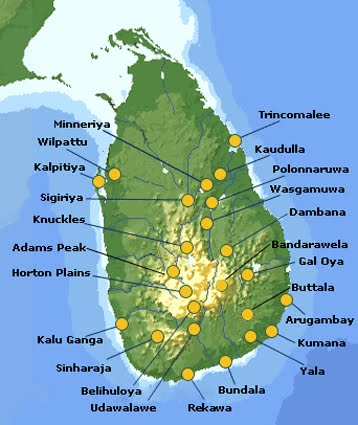
Sri Lanka, formerly known as Ceylon is a prime destination in Asia for Tourism in the likes of Agro Tourism, Eco Tourism, Adventure Tourism, Culture Tourism, Nature Tourism and is an ideal location for various Travels, Tours and Holidays such as Eco Tours, Adventure Tours, Eco Adventure Tours, Nature Tours, Agro Tours, Explorations, Expeditions, Vacations, Holidays, Excursions, Eco Holidays, Adventure Holidays and Eco Adventure Holidays

Click here Key Indicators of Sri Lanka

Sri Tours is a Service Provider Company for Tours , Travels, Trips, Vacations and Holidays for the Tourist with diversified interests and have devised many Tour Packages of our own. We also operate through many Travel Agents and Tour Operators in Sri Lanka and overseas. We have our own Adventure Professionals, Guides, Interpreters and Helpers to give the extravagant and extrovert tourist with a taste for Nature, Adventure, Culture, History, Agriculture his heart’s desire in Camping, Bird watching, Ornithology, Trekking, Hiking, walking, Rambling Rain forest, Wild life, sanctuaries, Safaris, parks, Game Parks, Game Drives, White water rafting , Canoeing, Kayaking, Scuba diving, Snorkeling, Cycling, Mountain biking, riding, Mountain climbing, Rock climbing, Whales watching, dolphin watching, Jeep tours,4 WD Adventures, Cross Country Tours, Off Road Adventures, Nature Weddings, Surfing, Special Interest Tours, Buddhism, Ayurveda, Butterfly Watching, Turtle watching, Flora and Fauna, Pre-Historic Civilizations, Ancient Civilizations, Waterfalls, Sri Lanka’s Native /indigenous Tribe – Veddas -, Asian Elephants, Water Skiing, Wind Surfing, Sea Kayaking, Fishing, Deep Sea Fishing , Water Sports, Endemic birds / Whale Spotting / Yoga / Meditation. We also provide our services for tea factory visiting, spice garden visiting upon your special requests. From this you could see and taste how Sri Lankan produce world’s best quality tea and spices. 

Accommodation of client’s choice like in Hotels, Small Hotels, Lodges, Jungle Camps, Luxury Camps, Super Luxury Camps, Safari Camps Campsites, Tree Houses, Cabins, Beach Hotels, Resorts, Hostels, Village Houses, Houses, Home Stays / Eco Lodges are arranged. 

HORTON PLAINS NATIONAL PARK

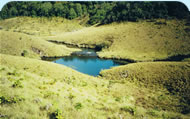
HORTON PLAINS NATIONAL PARK, Sri Lanka is undoubtedly one of the world’s best nature reserves and eco tourism venues. It is characterised by a beautiful landscape of rolling hills, covered in upper montane forest and wet patana grassland.
In general, the forests are seen on the hilltops or upper slopes the grasslands in the valleys and lower slopes, eventually giving way to wetland habitats. Spanning approximately 10,000 hectares the park is also home to a wide variety of flora (57 species, 29 endemic to Sri Lanka) and 24 species of mammal such as elk, deer, giant squirrel, wild boar, wild hare, porcupine and leopard. For bird enthusiasts, there 87 species (14 of which are endemic), including many migratory birds.

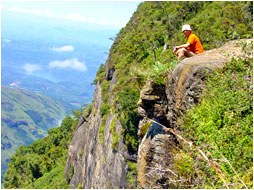
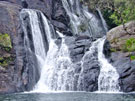
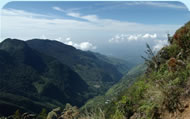
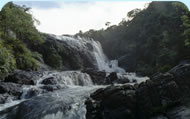
The Plains also feature many interesting attractions such as ‘Bakers Falls’, ‘Chimmini Pool’ and the famous ‘World’s End’ (a 3700 ft sheer drop that offers fabulous views of the tea estates below and all the way out to the distant southern coastline).   
The Horton Plains are located on Sri Lanka ‘s highest plateau, between altitudes of 2,000 and 2, 300m. The landscape typically consists of undulating lands covered in a tropical cloud of forests or verdant montane savannah grasslands, locally known as patannahs. Visiting Horton Plains or ‘Mahaeliya’ as it is traditionally named is quite popular amongst locals, who mostly come to admire the views from the park’s thrilling escarpments such as World’s End at weekends . For this reason we recommend that you try to organise your visit during a weekday as this ensures that you will experience the Plain’s isolated serenity.

Visitors to the park can follow a 10km loop that incorporates all of the spectacular features, enabling them to enjoy them while adhering to the strict rules for environment protection and nature conservation. The best time to visit is early in the morning as this is when the air is likely to be clearest so that you can enjoy the best of the views. In the afternoons, clouds tend to descend and the area becomes submerged in mist. This is equally enthralling though and provides evidence for the evolution of this forest type. Allowing a half-day should give you plenty of time to enjoy it all at a leisurely pace.

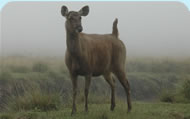
The Plains are actually named after Sir Robert Wilmot Horton, a rather selfish and bloody-minded Brit (no surprise there then) who was singularly responsible for the slaying of all of the elephants in the area between 1831 to 1837. Although there is little hope of elephants ever returning, you can at least walk around in comparative safety admiring the many other interesting creatures around and about. Of these perhaps the most worthy of a mention are the Samber Deer, a common sight at dusk and in the early hours of the morning.

In order to get the most out of your visit we recommend that an expert naturalist provided by Eco-team take you around. These guides are good company and extremely knowledgeable; having their input can add a lot more interest to the trip.

One of Sri Lanka ‘s least known mammals, the mouse-deer found in the highlands of Sri Lanka has been photographed in the wild. This may well be the only occasion in which it has been photographed to a ‘publishable standard’ under truly wild conditions. . For many years it was believed that Sri Lanka had one species of Mouse-deer, which was shared with Southern India . Colin Groves a British Taxonomist in June 2005 published a paper in a special supplement (No 12) of The Raffles Bulletin of Zoology whereby he distinguished three species of* Mouse-deer from Sri Lanka and India. The Indian Mouse-deer (Moschiola indica) was, split, as a new species and is now- considered .endemic to the Eastern Ghats of India. The Mouse deer found in Sri Lanka was split in to two new species. The White spotted Mouse-deer found (Moshiola meeminna) in the dry zone of Sri Lanka and the Yellow-striped: Mouse-deer (Moschiola kathygre) found in the wet zone of Sri Lanka. Both species are endemic to SriLanka. Presently this raises the number of endemic mammals found in Sri Lanka to eighteen species.

Colin Groves in his paper on mouse-deer from India and Sri Lanka also stated that ‘a single skull from Sri Lanka ‘s Hill Zone may prove to represent a fourth species’. The ‘Mountain Mouse-deer’ is evidently a very scarce animal. Many of the field staff Horton Plains National Park had not seen one although they regularly encounter other nocturnal mammals including leopard.

A Mountain Mouse-deer was seen under quite dramatic circumstances on Monday 25th February by wildlife populariser Gehan de Silva Wijerathne & Nadeera Weerasinghe Naturalist St Andrew’s Hotel. With the permission from WLDC it was temporally held captive for research and observation purposes and released back in to the wild on the 27 th February.

WASGAMUWA NATIONAL PARK

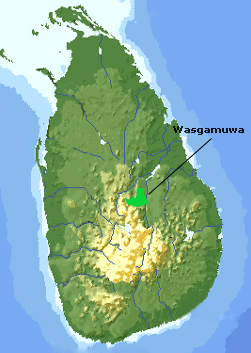
WASGAMUWA NATIONAL PARK located in the districts of Matale and Polonnaruwa and bordered by the ‘Mahaweli’ and ‘Amban’ rivers, stretches an impressive 36,948 hectares. It was declared a National park in 1984, making it the only one in the Central Province. Home to a huge variety of flora and fauna (23 species of mammal – including elephants and bears, 143 birds, 8 amphibians, 17 fresh water fishes, 17 reptiles, 50 butterflies and 150 plants), this park is truly a paradise for the nature lover.  Long before wildlife conservation became fashionable, Sri Lanka already had areas of jungle marked out for conservation. One such case is that of the Wasgomuwa National Park , a portion of which was declared a Strict Nature Reserve as early as 1938.

Life here, of course, is abundant, a testimonial to the success of Sri Lanka ‘s early conservation efforts. Fifty or so species of butterflies (nine of which are endemic) sprinkle the park with a splash of welcome color just when you think your eyes are dying of dullness from the browns and grays of all those large mammals, which drink from every stream and river the veritable White Mountain feeds. If you try looking into these rivers and streams, you might catch a glimpse of the Stone Sucker or Combtail, two of the 17 species of fish swimming in them.

Watch out for Water Monitors and crocodiles while looking for fish though, and try not to run afoul of these not-too-friendly reptiles. While some would say that all reptiles are hideous, the more adorable ones include the endangered skink and the Dangaradanda as well as the Red Lipped Lizard and – with a name implying that normal people actually notice the ears of lizards – the Earless Lizard.

No discussion of a national park in Sri Lanka is complete without the naming of a few birds, as we have noted in our section on Minneriya-Giritale National Park . So here are a few more cool names for you to memorize. It is intriguing how people name birds, and we’re quite sure that’s part of the fun.

In Wasgomuwa National Park – where the Lesser Adjutant does not refer to a disgraced general – there are about 143 species of birds. Examples (besides the Lesser Adjutant) include the Red-faced Malkoha and Yellow Fronted Barbet; the Sri Lanka Jungle Fowl; and Sri Lanka Spur Fowl, sometimes misheard as “super-fowl”. There is also the Sri Lanka Frogmouth, which appears to have no beak. Speaking of which, this might be a convenient place to draw your attention to the Slender Wood Frog, an endangered amphibian and the most noteworthy among the eight species found here.
It’s not terribly fun just reading names, is it? Much better to just take that three-hour car ride and see for yourself the amazing assortment of life teeming in Wasgomuwa National Park.

UDAWALAWE NATIONAL PARK

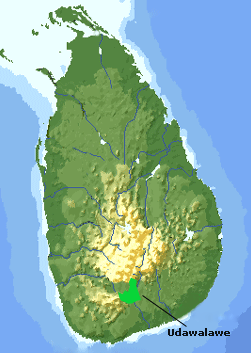
UDAWALAWE NATIONAL PARK is located approximately 200 km south-east of Colombo city and is a major eco tourism destination in Sri Lanka . The 30,821 hectares dry zone game park has an annual rainfall of 1524 mm and an average temperature of 29.4°C.
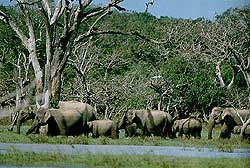
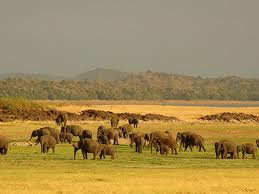
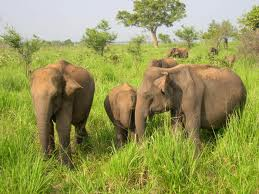
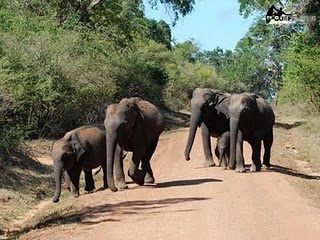
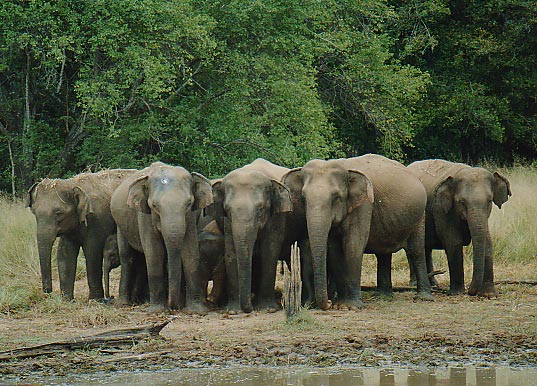
It is most famous for the many elephants that live there (about 400 in total). During a visit, it is not unusual to see whole herds of adults and young elephants– feeding or bathing and playing in the water! In addition to this main attraction, the park is home to many water buffalo, water monitor lizards, sambar deer, monkeys and the occasional leopard, as well as being an exciting location for bird enthusiasts.
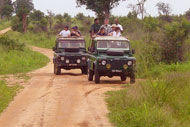
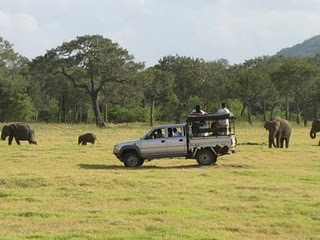
A 4WD open-top safari is the only way to see all the wonders that this protected reserve has to offer and our experienced and knowledgeable nature guides will make this an unforgettable experience.

The Udawalawa national park was established on 30 th July 1972.It lies in the lower catchment of Udawalawa Reservoir in the country’s Intermediate Lowland region. This area falls into two administrative districts in two provinces. The parkland on the right bank of Walawe ganga is within Ratnapura district in the province of sabaragamuwa and the parkland on the left bank falls within Moneragala district in the province of Uva . This Park is located approximately between the latitudes 6 25’E and 6 35′ N and longitudes 80 45’N and 81 00′ E. The dry land area of the Park is about 119 Sq miles or 308 Sqm, approximately 28910ha. The Udawalalawa reservoir is situated within the park premises, the total surface area of which at full supply is 3405ha. The total area of the park within the declared boundary including the reservoir is 32,315ha.

Altitude and Physical Features
Altitude ranges from about 100m on the plains to 373m at the top of the deep Walawe Reservoir (3,400ha), which is surrounded by open plains and foothills. The most prominent feature is the kalthota Escarpment and spectacular Diyawinne Fallto the north. Ulgala, in the west of the most prominent peak.

Climate:

The climate in the park is characterized by a seasonal rainfall and uniformly high temperature conditions. The average annual rainfall is about 1500mm in the south end, and it gradually increases towards the north. The annual average temperature is about 32 C.

The rainfall experienced in the Park is characterized by a bimodal pattern of distribution in both monthly and weeklty rainfall. Two rainfall peaks occur in an year, one in April- May and the other in the October – November. A short dry spell is experienced in February- March and a prolonged dry period is observed from mid May to end of September. The temperature in the National Park situated so close to 6 N, remains high and relatively uniform throughout the year, that is extreme fluctuations of temperature do not occur within the National Park or its surroundings. The annual average temperature is about 29 C.

Plant life and the Vegetation

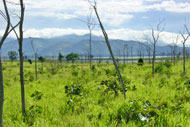
Vegetation, Originally forested, grassland and thorn-scrub now predominate. Much of the forest was destroyed by chena (shifting cultivation). Tree species include Satin ( Chloroxylon swietenia ), Halmilla (Berrya cordifolia ), Ebony ( Diospyros ebenum ) Ehala ( Cassia fistula ), Kolon ( Adina cordifolia ), Milla ( Vitex pinnata ), Kon (Schleichera oleosa) and Kunumella ( Diospyros ovalifolia ). Scattered trees, constituting 20-50% of existing cover, are mainly satin, ehala and lunumidella ( Melia dubia ). In the riverine forest, kumbuk ( Terminalia arjuna ) and the endemic mandorang ( Hopea cordifolia ) are dominant. Scrub is dominated by damaniya (Grewia tiliaefolia ). Savanna grasslands are dominated by Mana ( Cymbogon confertiflorus) , Illuk (I mperata cylindrical ) and Pogon ( Pennisetum olystachyon)                                                          

Animal Life

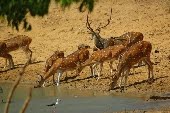
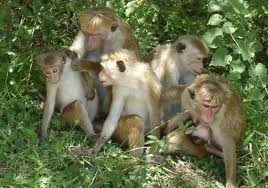
This park is very famous for the Elephants (Elephas maximus). There are herds of elephant feeding in the grasslands. The Sambar deer (Carvus unicolor), Spotted deer (Carvus axis), Muntjac (Muntiacus muntjak), wild boar (Sus scrofa) and water buffalo (Bubalus bubalis) are re-establishing themselves. Other mammals include: toque macaque (Maccaca sinica) endemic, common langur (Presbytis entellus), jackal (Canis aureus), toddy cat (Paradoxurus hermaphroditis), leopard ( Panthera pardus) and black- napped hare (Lepus nigricollis) and small Indian civet cat (Viverricula indica), endemic golden palm civet cat ( Paradoxurus zeylonensis) , three species of mongoose (Herpestes fuscus), (H. smithi) and (H. vitticollis), an endemic shrew (Suncus sp.), gerbil (Tatera sp.), rat (Rattus rattus kandianus , soft- furred rat (Millardia meltada), Indian bush rat (Golunda elliotti), mouse (Mus cervicolor) and the endemic (Mus fernandoni)

The avifauna includes large numbers of warblers ( Prinia spp .), together with the usual lowcountry birds in forested areas, and a veriety of reptors. Water birds foun on the reservoir include rare visitors such as Indian cormorant ( Phalacrocorax fuscicollis ) and osprey ( Pandion haliaetus ). Notable endemic species are Sri Lanka spurfowl ( Galloperdix bicalcarata ), Sri Lanka junglefowl ( Gallus lafayetti) , Malabar pied hornbill ( Anthracoceros coronatus) , endemic gray horonbill ( Tockus griseus ) and brown- capped babbler ( Pellorneum fuscocapillum ).

The Uda Walawa Reservoir
The Uda Walawe reservoir itself, deep and continuously replenished by the never drying Walawe river which draws most of its water from the wooded Peak Wilderness sanctuary, the Horton Plains Nature reserve and the Haputale area. The fringes of the reservoir and the narrow creeks are now characterized by the preszence of weather- bleached skeletons of thousands of jungle trees, killed off by the dammed water. Tilapia mossambica has been introduced by the Fisheries Department. The reservoir could become an important breeding place for aquatic birds.

WILPATTU NATIONAL PARK

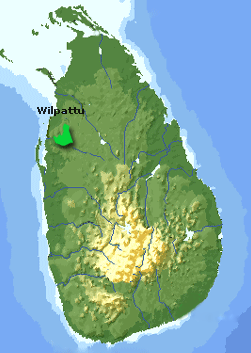
WILPATTU NATIONAL PARK is located 26 km north of Puttalam (approximately 180 km north of Colombo) spanning from the northwest coast inland towards the ancient capital of Anuradhapura (50 km to the east of the park). Covering an impressive 425 sq miles, the park is Sri Lanka ‘s largest, and having reopened in March, 2010 it is just a matter of time before it becomes a popular eco-tourism destination.
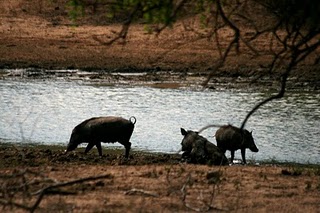
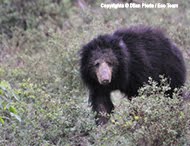
Wilpattu is a fairly thick dry zone jungle interspersed with a number of flood plain lakes banked with delicate white sands. It boasts an impressive variety of flora in huge expanses of forest, and varied wildlife, including deer, elephants, wild boar, sloth bears and leopards.

The Wilpattu National Park and its surrounding are steeped in history and covered with legend.Popular legend says that in 543 BC King Vijaya landed at Kudrimalai and that he married Kuweni. According to some ancient ruins identified, it is said that Kuweni lived in the place now identified as the Kali Villu. Both Kudrimalai and Kali Villu are found in the Wilpattu. Furthermore history shows that Prince Saliya, son of King Dutugemunu, lived with Asokamala in Maradanmaduwa in Wilpattu over 2000 years ago. Pomparippu too is of historical value as urns containing the remains of those belonging to pre Vijayan times have been excavated from that site. Also between Palangaturai and Kollankanatte are the remains of an old harbour. In 1905, the designated area in Wilpattu was declared a sanctuary. Thereafter it was upgraded to national park status on February 25, 1938.

Location
The park is located 30km west of Anuradhapura and spans the border between the North Central and North Western Province. It is bordered by the Modaragam aru in the south the Kala Oya in the north and is bordered by the Indian ocean in the west. The Wilpattu National Park is the largest national park in the area with an acreage of 131, 693 hectares. It is situated ranging from sea level to 152 metres above it.

Climate

Annual temperature in the Park is around 27.2 Celsius and its annual rainfall is approximately 1000 mm. Though situated in the dry zone, the climate inside the Wilpattu National Park is very unlike that of the dry zone. Upon entering the densely wooded Park, a feeling of going to a forest with abundant water is what enters the mind. This is perhaps explained by the patterns of rainfall it experiences. The period between September to December is known as the rainy season at Wilpattu with the north eastern monsoon falling heavily. Inter monsoon rains come to Wilpattu between March and April. The period of drought extends from May to early September.

Flora
There are many Villu and lakes at Wilpattu. This is identified as the main topographical feature of the Park. They are often flat and basin like while containing purely rain water. The western sector of Wilpattu is covered deeply with forests. Many species of flora can be identified at Wilpattu national park. There are three types of vegetation; Littoral vegetation, including Salt grass and low scrub immediately adjacent to the beach and further inland, monsoon forest with tall emergents, such as Palu (Manilkara hexandra), and Satin (Chloroxylon swietenia), Milla (Vitex altissima), Weera (Drypetes sepiaria), Ebony (Disopyros ebenum) and Wewarna ( Alseodaphne semecapriflolia).

Fauna

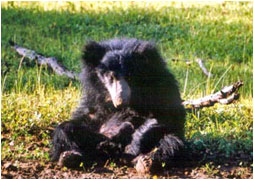
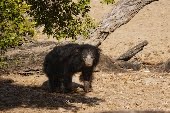
Looking at the fauna of this national park mammalian diversity and ecological densities are highest. A total of 31 species of mammals have been identified at the Wilpattu national park. Mammals threatened with extinction are also there. The elephant (Elephas maximus), Sloth bear (Melursus ursinus), leopard (Panthera pardus kotiya) and water Buffalo (Bubalus bubalis) are identified as the threatened species living within the Wilpattu National Park.Other wetland bird species as Garganey (Anas querquedula), Pin tail (Anas acuta), Whistling teal (Dendrocygna javanica), Spoonbill (Platalea leucorodia), White ibis (Threskiornis malanocephalus), Large white egret (Egretta alba modesta), Cattle egret (Bubulcus ibis) and Purple heron (Ardea purpurea) also found at the Wilpattu National Park.

There are many Villu and lakes at Wilpattu. This is identified as the main topographical feature of the Park. They are often flat and basin like while containing purely rain water. The western sector of Wilpattu is covered deeply with forests. Many species of flora can be identified at Wilpattu national park. There are three types of vegetation; Littoral vegetation, including Salt grass and low scrub immediately adjacent to the beach and further inland, monsoon forest with tall emergents, such as Palu (Manilkara hexandra), and Satin (Chloroxylon swietenia), Milla (Vitex altissima), Weera (Drypetes sepiaria), Ebony (Disopyros ebenum) and Wewarna ( Alseodaphne semecapriflolia).
Looking at the fauna of this national park mammalian diversity and ecological densities are highest. A total of 31 species of mammals have been identified at the Wilpattu national park. Mammals threatened with extinction are also there. The elephant (Elephas maximus), Sloth bear (Melursus ursinus), leopard (Panthera pardus kotiya) and water Buffalo (Bubalus bubalis) are identified as the threatened species living within the Wilpattu National Park.Other wetland bird species as Garganey (Anas querquedula), Pin tail (Anas acuta), Whistling teal (Dendrocygna javanica), Spoonbill (Platalea leucorodia), White ibis (Threskiornis malanocephalus), Large white egret (Egretta alba modesta), Cattle egret (Bubulcus ibis) and Purple heron (Ardea purpurea) also found at the Wilpattu National Park.
At Wilpattu, among the reptiles found the most common are the Monitor (Varanus bengalensis), Mugger crocodile (Crocodylus palustris), Common cobra (Naja naja), Rat snake (Ptyas mucosus), Indian python (Python molurus), Pond turtle (Melanonchelys trijuga) and the Soft shelled turtle (Lissemys punctata) who are resident in the large permanent Villus. We can saw Star tortoises (Geochelone elegans) roaming on the grasslands at Wilpattu. Termites of the Genus Trinervitermes clan probably account for the most significant proportion of the invertebrate bio mass. Termites are found not on the grasslands but actively living in the scrub forests. Nearly sixty lakes and tanks are found spread around the Wilpattu National Park.

YALA NATIONAL PARK

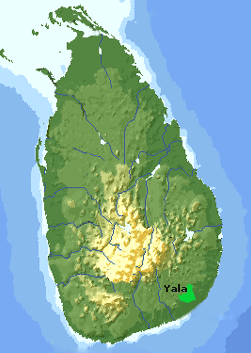
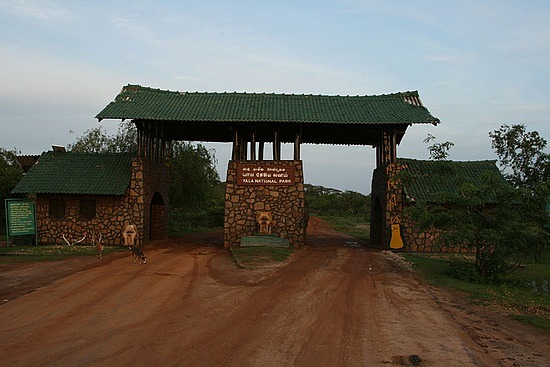
YALA NATIONAL PARK, one of Sri Lanka ‘s premier eco tourism destinations, lies 24km northeast of Tissamaharama and 290km from Colombo on the southeast coast of Sri Lanka, spanning a vast 97,878 hectares over the Southern and Uva Provinces.
The vegetation in the park comprises predominantly of semi-arid thorny scrub, interspersed with pockets of fairly dense secondary forest. Small patches of mangrove vegetation also occur along the coastal lagoons. The park is renowned for the variety of its Wildlife (most notably its many elephants) and its fine coastline (with associated coral reefs). It also boasts a large number of important cultural ruins, bearing testimony to earlier civilizations and indicating that much of the area used to be populated and well developed.
YALA is among the oldest and best known of Sri Lanka ‘s National Parks. Yala covers about 1297 sqkm or 129,700 ha. And it is the largest agglomeration of protected areas in the country. The multifarious ecosystems ranging from Moist Monsoon Forest , to Dry Monsoon Forests, Semi Deciduous Forests, Thorn forests, Grasslands, fresh water & marine wetlands, and sandy beaches, possesses a large number of important plant species and smaller animals.
Kumbukkan Oya in the North East and Menik Ganga and tributaries on the West, flow through the Park providing a source of water to the animals even during the driest months of the year.
Yala plays a very significant role in conservation of a large number of flora and fauna in the country. Historical and religious sites such as Kataragama, Sithulpahuwa and Magul Maha Vihara and many archaeologically important places add additional significance to the area.
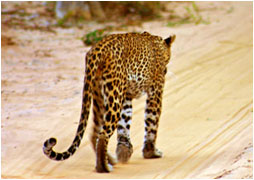
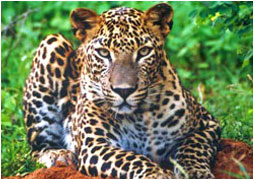
Yala West (Ruhuna) National Park is well recognized as one of the best parks in the world to observe and photograph leopards. The park covers an area of over 100,000 hectares and is divided into five blocks.

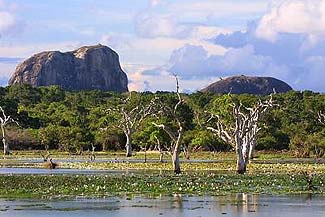
Block one is the most visited area since it contains the highest density of leopards. However other areas of Yala such as Yala East had been closed to visitors for some years and it will take time to research leopard numbers in these areas. Yala West consists of scrub jungle, brackish lagoons and stunning rock monoliths scattered throughout the park, its eastern edge is bounded by the South East coast. Yala has well over thirty leopards, probably the highest density anywhere in the world. It is also thought that Sri Lankan leopards are a distinct sub-species from their Indian neighbors, and the largest leopards in Asia.

It is possible to take full day jeep safaris or to split your day into morning and afternoon drives. Your best chance to see a leopard is generally early in the morning and then again at dusk. You can stay until just after dark inside the park, thus maximizing your chances of a leopard encounter. The male leopards in Yala are very confident and are often seen walking the tracks during the day. Young males in particular seem to have no fear of the jeep, which can lead to some excellent photographic opportunities. There are similarities between Yala and the best National Parks in India for photographing tigers, in both cases the big cats have become used to the jeeps thus enabling us to enjoy a privileged view of these magnificent animals.

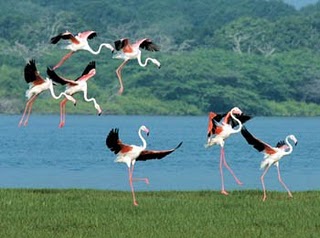
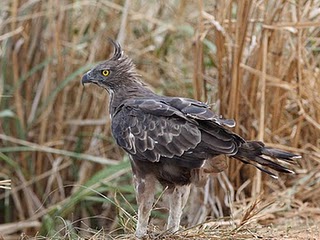
There is also a substantial elephant population along with Spotted deer, Sambar, Wild buffalo, Sloth bear, Jackal, Mongoose, Pangolins and Crocodiles. The bird life comprises over 120 species, and ranges from Lesser Flamingos to Paradise Flycatchers, Crested Hawk Eagles, and Black Bitterns. Outside of the park are several other fascinating birding locations, including the ancient hermitage of Sithulpahuwa, Debarawewa wetland and Palatupana saltpans. The coastline forms a major nesting ground for marine turtles. The drier season falls between May and August and the park closes for a short time during September and October.

HIKKADUWA

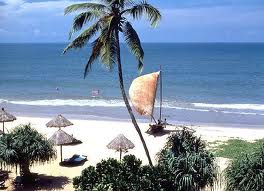
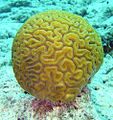
Among the coastal side tourist attractions in Sri Lanka Hikkaduwa beach has a special place for its exquisite white sands and uniquely beautiful corals that has lured many visitors and tourists to take a glimpse at the marvels that can be seen in full abundance. Magnificent corals and tropical fishes are the top priorities in this highly popular beach location and being the only marine life sanctuary in Sri Lanka it is also a fine and rich place to explore the bio diversity and marine life of this beautiful tropical island. White sans glistening under the warm sun shine sure has made the place have a captivating effect on tourists and visitors. Pristine in nature Hikkaduwa beach is the ideal place for the visitor who is in search of peace of mind and relaxation enjoying sun and sand.

Abundant corals and tropical fishes become a way of entertainment for the tourist as they have some quality time spending their vacation in total tranquility. Easy access to view the remarkable underwater sea life is definitely a not be missed experience for anyone who is looking for some adventure and excitement finding out the marvels that are hidden under the deep blue waters. Entire experience has soothing and exhilarating kind of sensations and emotions taking over the visitors. Corals in Hikkaduwa beach provide plentiful sights for the visitor who has a niche for snorkeling because some parts of the beach have very close connections with land and beach allowing the in between space to have a rich and unique bio diversity that waits to be explored.
Tropical fishes which are part of that system adds color and variation to the location and what any visitor might see in the place is bound to take their breath away for magnificence. The combination of corals and fishes in the tropical environment also makes the snorkeling experience to be rich in enthralling and enticing effect. For those who are seeking adventure and thrill during their vacations also can have their wishes come true in Hikkaduwa beach because the place facilitated some pretty interesting water sports. Among those surfing is one of the most popular outdoor activities and visitors are heading to have a truly gratifying and satisfying surfing experience in the location.

Waves that are perfect for an adventurous surf ride are not short of hitting the beaches in every now and then so the thrill seeking tourist are fully enabled to have a really great time enjoying some action amidst rising waves. Nature lovers are sure to get more than they bargain for in this wondrous location. Hikkaduwa beach is therefore a one of kind coastal location for its fine white sand and sun streaked beach that would be a dream come true experience for visitor or tourist who is looking forward to get an enviable tan while experiencing sun and fun in this fabulous place. Thus the prefect combination of mind blowing features like unique corals and rare tropical fiches make this place to be a haven for nature lovers and adventure seekers too can have a great time finding solace in snorkeling and surfing.

Hikkaduwa National Park is one of the two marine national parks in Sri Lanka. The national park contains a fringing coral reef of high degree of biodiversity. The area was declared a wildlife sanctuary on May 18, 1979, and then on August 14, 1988, upgraded to a nature reserve with extended land area. The growth of the number of visitors in the next 25 years increased the degradation of the coral reef. To reduce the effects to the ecosystem, the reef was declared a national park on September 19, 2002.

NEGOMBO

The name “Negombo” was first used by the Portuguese, a corruption of the Sinhala name Mīgamuva(මීගමුව).” The town is situated by the shores of a lagoon of the same name, and was a trading port during the periods of Portuguese and Dutch colonization.
History
Negombo first flourished as a center for cinnamon production in Sri Lanka. The cinnamon industry in Negombo was initiated by the Portuguese, and subsequently attended to by the Moors(Muslims). After the Portuguese were defeated by the Dutch in 1640, the Cinnamon business was kept as an key aspect of the regions economy. However, by the time the British took over in 1796, the industry was in decline. Another point of interest in Negombo is the Old Dutch Fort, which was built in 1672. It is situated near the shore and offers a glimpse into the colonization history of Negombo. However, the Fort is now in a state of disrepair.

Negombo lagoon

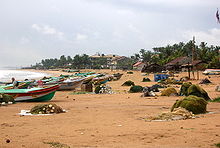
The fishermen who are based at the Negombo lagoon live in abject poverty in shanty thatch palm villages along the water’s edge. They relay mainly on their traditional knowledge of the seasons for their livelihood, using outrigger canoes carved out of tree trunks and nylon nets to bring in modest catches from September through till April.

Fishing boats in Negombo

Their boats are made in two distinct forms, oruvas (a type of sailing canoe) and paruvas (a large, man-powered catamaran fitted with kurlon dividers), and are said to have originated in the islands off the Mozambican coast; they were brought to Sri Lanka by Portuguese traders in the 17th century.

For generations the lagoon has provided the fishermen with a plentiful supply of crabs, shrimp and many of the native species of fish, but with the onset of global warming these sources of food have dwindled. The men are regularly forced to head out to the ocean to fish, often losing money in the chartering process. In recent years, the villagers have supplemented the income earned from fishing by collecting toddy, or palm sap, which is used to brew arrack.

Negombo Beach

Negombo is an ideal place for those who want quick access to and from the country’s international airport. The 100 km long canal network running through the town is still used, and outrigger canoes and modern water-craft ply this route daily, for trade and tourist purposes. Remains of colonization include the Dutch fort built in 1672, as well as centuries-old Portuguese and Dutch houses, administrative buildings, and churches. Negombo is also home to the country’s second-largest fish market, the Llelama, at the north end of the town’s lagoon. There are daily fish auctions, which give tourists a chance to meet the area’s colourful fishermen and even organise fishing trips into the lagoon and the ocean beyond. Other nearby attractions open to visitors include Muthurajawela, which is part of a 6,000-hectare (14,826-acre) protected marshland, home to over 190 species of wildlife.

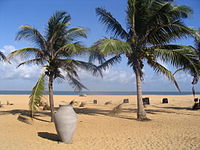
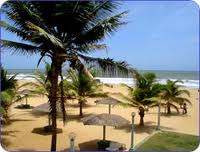
Negombo offers some of the better beaches on the west coast of Sri Lanka, and draws tourists who stop over for a day on their way to or from the airport. Some quiet stretches of the beach are maintained by the tourist hotels, while others are always busy with fishermen and their equipment. Water-sports and diving are also popular among visitors, with a few well-preserved coral reefs and a 50-year-old shipwreck (Kudapaduwa) that serves as an artificial reef for many varieties of fish.

Religion
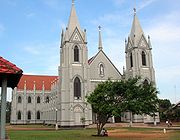
St. Sebastian’s Church in Negombo

Since the beginning of European Colonization, the township of Negombo has a majority of Roman Catholics along with Buddhists, Hindus and Muslims. Negombo has been given the name “Little Rome” due to the highly ornate Portuguese-era Roman Catholic churches such as St Marys church found within the township. The Katuwapitiya Church and the Grand Street Church are two biggest parishes in Negombo. “Agurukaramulla Pansala” is a famous Buddhist temple bringing Buddhists from all over Sri Lanka to Negombo every year.

ARUGAMBAY

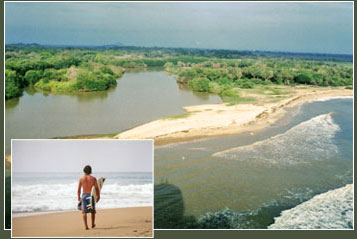
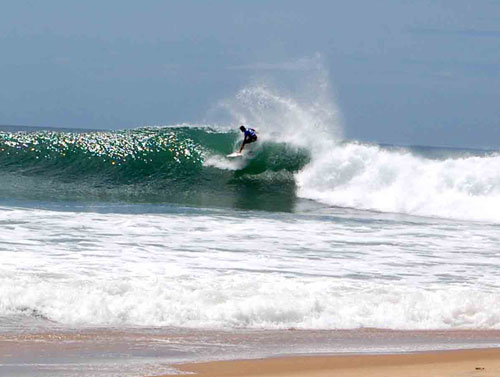
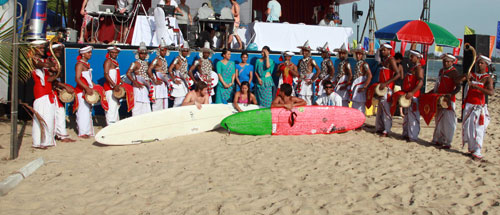
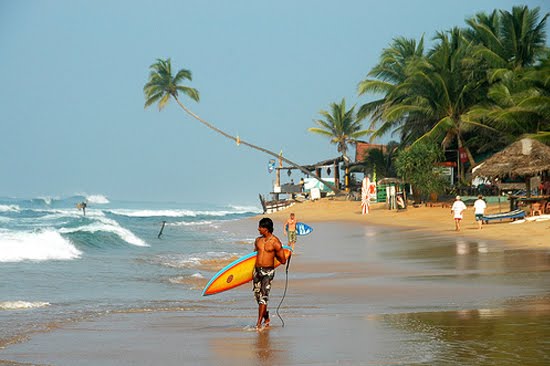
ARUGAMBAY is on the list of the top ten surf points in the world. Situated on the South East side of Sri Lanka Arugam Bay receives the same Antarctic winter swell’s that hit Indonesia in the in the middle of the year. The best time of the year is between May and November when the predominant wind is offshore for at least the first half of the day.
Due to its location and southerly swell direction the area is dominated by right hand point breaks. There is a beach break in front of the Stardust Hotel, which can be fun for body surfing or for beginners but that’s about it.

Three of the point breaks “The Point”, “Pottuvil Point” and “Crocodile Rock” are within a ½ hour tuk-tuk ride from the center of line of hotels. There are several other points that are within a 1½-hour’s ride or can be accessed by boat.
Arugambay, situated on the South-eastern coast of Sri Lanka , just next to Potuwil, around 320 km from Colombo , is a unique and versatile tourist destination. The uniqueness is that unlike many other coastal areas, it is unaffected by both the monsoons – South-west and North-east – which affect almost all other coastal areas for at least half the year. Even the rain during the monsoon is not continuous but intermittent, making it an year round tourist destination.

The versatility of Arugambay is that, apart from being one of the Top Ten Surf Points in the world , it offers a vast clean beach, beautiful inland landscape, very rich birdlife, equally rich wildlife and even ruins of ancient Buddhist Culture. Excavations outside Potuwil have unearthed a 2000 year old Buddhist Temple named “ Muhudu Maha Viharaya”

Despite being a popular Tourist Destination, Arugambay has remarkably preserved its’ beauty, tranquility, charm and has remained unspoiled. This, coupled with the availability of cheap transport, low cost accommodation and its’ friendly people, Arugambay is an ideal tourist destination to the ordinary tourist. However Arugambay has several star class hotels too, opening its’ doors even to the high class tourist.
Arugambay, only 2 km away from Potuwil which is the closest town with a population of around 12,000 inhabitants, consists of three villages, namely Ullae , Perie Ullae [ Bigger Ullae- Perie in Tamil is Big] and Sinne Ullae .[ Smaller Ulle-Sinne in Tamil is small ] Though there are Sinhala and Tamil communities living in these areas, these are predominantly Muslim areas.

Ullae, which is in the centre of these villages, is a very famous place among the Sinhala fishermen in the west coast. The village, being in the corner of the bay, has a very quiet sea and is an year round fishing area and is a very colourful place bustling with activity. As such, the fishermen from the west coast flock to this village during the South-west monsoon which hits the west coast.
Apart from fishing, people in these areas and in Potuwil are engaged in cattle farming and paddy cultivation. The fishing boats go out around 4.00 am about one and a half hours before the sun rises.
Starting a jeep drive or a walk along the lagoon towards the south a little before sun rises and between 5.00 pm and 7.00 pm, one can encounter wildlife such as elephants, boar, dear, crocodiles and many other animals in addition to bird watching.
With the North-easterly wind starting to blow and temperature being lowest at around 28-30 C , November and December is a good period for bird watching especially with the advent of lots of migratory birds. Though this is the rainy season in the east, the rain around this area is not continuous with many sunny days.
The blowing of refreshing wind in January, February and March dissipates the slight increase of humidity and temperature (to about 30-32 o ) and make the weather and wave conditions very good wind surfing, swimming and fishing. This period is also the best for bird watching.
Months of April and May are the hottest and most humid months. The temperature from April to August varies between 36-32 o . The changing of the wind direction to South-easterly in April/May starts the body surfing season which spans up to October. During this season, the sea in the west coast being very rough, holiday makers and surfers from these areas flock to Arugambay.

BELIHUL OYA

BELIHUL OYA, a very picturesque little hamlet renowned for its Eco, Adventure tourism opportunities, is situated in the “Sabaragamuwa” province of Sri Lanka, approximately 160 km from Colombo. This beautiful hillside location is a climatically transitional area, linking both the dry and wet zones and the hill and low country at an altitude of less than 1500m. As a result, the vegetation consists of moist semi-evergreen forests, tropical savanna forests, dry patana grasslands and montane temperate forests, making it one of the richest bio-diversity spots in Sri Lanka – a perfect location for nature lovers.

River Garden Nature & Adventure Related Activity Centre – BELIHUL OYA provides an ideal base for a wide range of nature and adventure related activities. Try anything from trekking across the Horton Plains (the HORTON PLAINS mountain range is visible from the River Garden restaurant itself) to canoeing in the ‘Samanalawewa’ reservoir. Whatever it is you want to do, we can help you do it! In addition to the accommodation options we offer, RIVER GARDEN has an excellent restaurant serving Sri Lankan and International cuisine, a well-stocked bar, doctor on call, left luggage facilities, mini library, and extensive tourist information.