Kandy

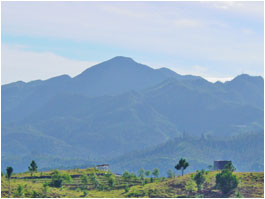
Kandy, the last royal capital of Sri Lanka is a major tourist destination. ( 115kM from Colombo at 465 meters above sea level). Famous for the Temple of the Tooth and many other temples the city could be called the cultural capital of the island.
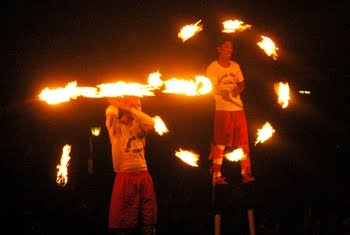
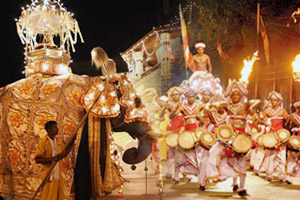
Kandy Perahera, the pageant of the temple of tooth where Buddha’s tooth is kept is held either in July or August each year to parade the golden caskets is a must see itenary if one is visiting Sri Lanka during these months. The final night procession is the most spectacular event of the country. More than 50 elephants parade the city accompanied by the drummers, dancers and chieftains.

he city established in the 15th century was the last royal capital where 2500 years of royal rule ended. This bustling market town is rich in cultural diversity has plenty of iteneries to offer to the tourists from songs dances and handy crafts to ancient temples and adventure activities. Kandy is a good transit point to the cultural triangle to the north or hill country to the south. The city is also a good source of souvenirs or to experience many cultural performances at it’s various hotels in the city.


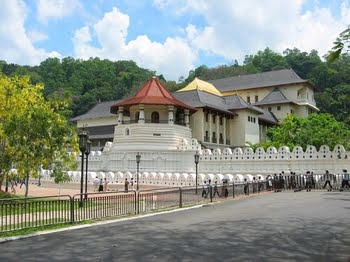
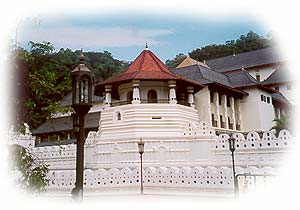
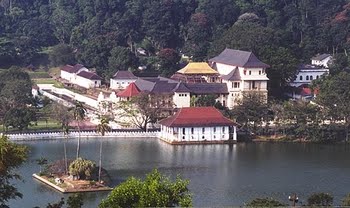
The main attraction of the city and also the most sacred Buddhist establishment in Sri Lanka is where one of Buddha’s tooth is being kept. Built in the 16th century but improvements and additions have been done to this structure until the fall of the Kandy kingdom. A golden canopy was added recently. Daily rituals are being carried out at various offering times to the shrine. A dress code applies for entering the temple. The magnificence has been enhanced by the octagonal pavilion.
According to legend, the tooth was taken from the Buddha as he lay on his funeral pyre. It was smuggled to Sri Lanka in 313 AD, hidden in the hair of Princess Hemamali who fled the Hindu armies besieging her father’s kingdom in India.

It immediately became an object of great reverence and was enshrined in a series of nested jeweled reliquaries. The tooth was brought out for special occasions and paraded on the backs of elephants, which are sacred to the Buddha. where it survived numerous attempts to capture and destroy it.

When the capital was moved to Kandy, the tooth was taken to the new city and placed in temples built to honor it. The temple was originally built under Kandyan kings between 1687 and 1707, but later severely damaged during the 18th-century colonial wars against the Portugese and Dutch. After the wars, the original wooden structures were restored in stone.
In January 1998 Hindu Tamil separatists bombed the temple, damaging its facade and roof. Restoration began immediately afterward.


Sri Lanka’s botanic gardens have a long and proud history, punctuated by colonialism, and industrial change. Throughout this period the gardens have continued to flourish, and the plant collections and herbarium grown. Within the context of the 21st century, the gardens represent a significant national asset for Sri Lanka. 


Over 1.4 million people visit Sri Lanka’s botanic gardens every year. And that is in addition to the 5% of the nation’s schoolchildren who visit annually. As a profit-making public institution, employing almost 450 people, the National Botanic Gardens are uniquely placed to educate by stealth, taking advantage of the pleasure and joy experienced by visitors to share, gradually, our growing knowledge and expertise in conservation, biodiversity, floriculture and sustainability

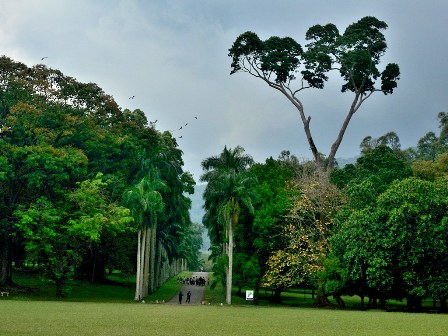
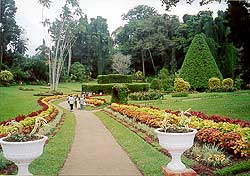
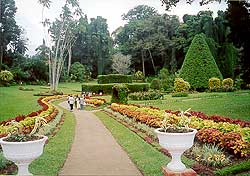
Once a pleasure gardens of a Kandyan Queen this 40ha land is a beautiful park with numerous tropical foliage and the best in the island. The Commander of the allied forces in Southeast Asia Earl Mountbatten had the headquarters in the garden during the Second World War

Bandarawela

The soothing climatic conditions in Bandarawela is a major reason why people congregate on the location for their holidays.
Situated at an altitude of 1230m and 10 kilometres north of Haputhale, Bandarawela is easily accessible through the Colombo-Badulla Main Road by vehicle and the upcountry trains that pass through. Nuwara Eliya, the famous summer resort of the Island called “Little England” is only 55km from Bandarawela and is accessible through Welimada.

The Dowa Rock Temple, with its unfinished Buddha Statue of about 15ft carved onto the rock face, the Shrine Room built into the rock cave and the entrance to the tunnel which is supposed to have linked Dowa to several distant temples underground is a major tourist attraction in the vicinity along with the many cascading waterfalls and towering mountain ranges.

Adam’s Peak

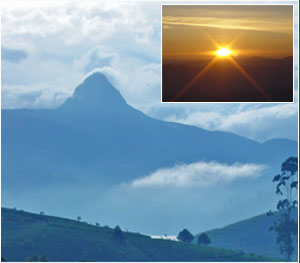
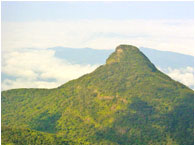
Adam’s Peak is one of the major eco tourism destinations in the hill country of Sri Lanka . The key attraction of the ADAM’S PEAK WILDERNESS SANCTUARY is Adam’s Peak itself.  The 2243 metre peak has a great significance for various different religions.  Buddhists believe the footprint on the summit is that of Buddha; Hindus hold it to be the mark of Shiva; Muslims are convinced it is that of Adam, who wept after the loss of Eden (whereby the mountain got its name); and some Christians believe the indentations were caused when St.Thomas, Christ’s Apostle who came East, prayed at the peak. As a result, the mountain peak has been a pilgrimage centre for over 1000 years. Whatever its religious significance, this famous landmark offers some breathtaking views of the hill country and an enchanting wilderness sanctuary. The majority of climbers begin their ascent at night in order to arrive at the top in time for a magical sunrise when the mystical shadow of the peak is perfectly cast across the clouds.
This eco tourism destination in Sri Lanka is one of those truly unique moments that will live on in your memory long after the aches and pains from the climb to the wilderness sanctuary have gone!  In addition to Adam’s Peak itself, the Peak Wilderness Sanctuary offers some superb nature trails through tropical rainforests, across rivers and past lush tea plantation.

Key Indicators of Sri Lanka

Key Facts
Size: 65,610 sq. km
Location: Southern Asia
Population: 20 million
Government: Democratic Socialist Republic of Sri Lanka
Leader: President Maithripala Sirisena
Currency: Sri Lankan Rupees (1 US$ = approx 135 rupees)
Time: GMT + 5 ,1/2hours

Geography

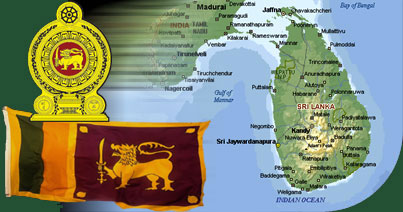
Sri Lanka is a land of massive contrasts. The topographical, ecological and cultural diversity in its compact 66,000 sq km makes it truly ‘a land like no other’ with no end to the nature and adventure related activities that are possible! Sri Lanka ‘s vast variety of habitats includes pristine rainforests, highland grasslands and tea plantations, virgin jungles, mangrove swamps, dry zone areas, white sandy beaches and several internationally recognized National Parks.
Also known as ‘the pearl in the Indian Ocean’, Sri Lanka (formerly called Ceylon island republic) is located 29 kilometres off the south eastern tip of the Indian subcontinent. It is separated from India by the Palk Strait and Gulf of Mannar .
—————————————————————————-
Climate
Sri Lanka can be described as ‘tropical’ in its climate, with a wet and dry season, further affected by two monsoons. The Yala monsoon rain to the southwestern part of the country- from May to August, while the dry season is approximately- from – December to March. In contrast, the north and eastern coast of Sri Lanka is affected by the Maha monsoon that makes it rainy and windy from October to January and dry from May to September. There is also an inter-monsoonal period in October and November when rain and thunderstorms can occur all around the island. These climate variations make it essential to plan your trip in advance to coincide with the best seasons for the particular areas you want to visit. Relative humidity in Sri Lanka varies from 70% during the day to 90% at night with an average temperature of 27°C in Colombo . In the higher elevations it can be quite cool with temperatures going down to 13°C at an altitude of nearly 2,000 metres. So be prepared to bring clothing for the extremes!
—————————————————————————-
Flora and Fauna
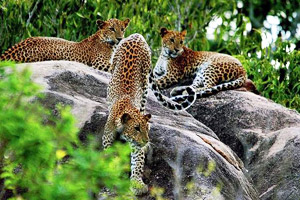
Such a diverse country as Sri Lanka is naturally home to an incredible variety of fauna and flora. Of the 86 species of mammals that live in Sri Lanka , pride of place goes to the majestic elephant – the second largest terrestrial animal surviving today. Other exotic species often seen are the leopard, the sloth bear, and many varieties of deer and monkeys. An island-wide prolific bird life is also sure to satisfy even the most serious of bird enthusiasts.
—————————————————————————-
Population and People
Sri Lanka has a population of 20 million and is set to peak at about 25 million by 2020. Less than one-quarter of the population lives in urban communities. Sri Lanka is divided into nine provinces and twenty-four administrative districts. Each province is headed by an appointed Chief minister.
—————————————————————————-
Languages
Sinhala, Tamil and English, are the three official languages, with Sinhala being spoken by more than 80% of the population. Tamil, a Dravidian language of southern India, is mainly spoken by people living in the northern and eastern provinces. English is widely used in many activities and businesses throughout the island.
—————————————————————————-
Religions
Buddhism , which was introduced into Sri Lanka in the 3rd century BC, is the prevailing faith. As practiced in Sri Lanka , Buddhism also exhibits elements of both Hindu and Islamic traditions
Tamil kings and their followers from South India brought Hinduism initially to northern Sri Lanka . Today there are significant Hindu communities in Colombo , Kandy and the tea plantation areas in the hill country, as well as in the north and east.
Arab traders visiting Sri Lanka from the 8 th century brought Islam to the island. The majority of the 1.8 million Muslims are Sunnis, however communities of Shiites have recently migrated from the Indian subcontinent.
Christianity arrived in Sri Lanka with the Portugese in the 16 th century when they brought Roman Catholicism to the island. The Catholic Church remains strong, particularly amongst the western coastal communities. During the Dutch period, Protestantism and the Dutch Reformed Church arrived (especially prevalent in Colombo ). Evidence of other denominations are sentiment to the British period, and an increasing number of evangelist churches spreading and growing.
—————————————————————————-
Other important information
Visas
Visas endorsement
Nationals from countries under Schedule A . will be Provided visa endorsements at the port of entry for a max period of 30 days, initially, which period can be extended if the stay concerns tourism. If the purpose is other than holidaying , the person concerned should obtain a prior visit visa from the Immigration authorities of Sri Lanka through an agent.
Nationals from countries not under Schedule A . should also obtain a prior visa what ever the purpose of their visit.
Eligibility for Stay
Should have a return air ticket currency or travelers cheques for the stay.
Validity period for Visa 90 days (initial issue)
Extention up to one year.
Service Charges & Tips
A 10% service charge is automatically added to bills in most top hotels and restaurants. There is no need to tip taxi drivers and if tipping hotel porters, around Rs. 20 per bag is recommended .
Etiquette/Dress Code
As with many Asian countries, modest dress is required; shoulders and legs should be covered when visiting temples or shrines. All visitors to temples should remove their shoes before entering and heads should be uncovered. Topless sunbathing is prohibited throughout Sri Lanka.
Credit cards
MasterCard and Visa are the most commonly accepted cards. Other major cards such as AmEx and DinersClub are also accepted.
Banking Hours
Monday to Friday 09.00 to 03.00 at all state & Private commercial Banks. Saturday banking has also recently been introduced by most Private commercial banks.
Telephone
The international dialling code for Sri Lanka is +94. When making international telephone calls from Sri Lanka , first dial 00 + country code + area code + telephone number.
Driving licences and permits
If you wish to drive yourself, you must obtain a temporary Sri Lankan driving licence, for which you need to show your home-country driving licence and preferably an international driving permit too.
Email & Internet Access
You shouldn’t have a problem finding internet facilities in the majority of tourist towns – even most towns that are off-the-beaten track have access. Internet facility in Colombo is cheap (at approx. 60 rupees an hour).
Electricity 
230-240 V, 50 cycles AC
Round 3-pin plugs are used in Sri Lanka .
Water
Tap water is not considered safe for consumption .Bottled water is widely available throughout the country (make sure the bottles are sealed before you buy them).
Laundry
All top-end and mid-range places to stay have laundry services, and the majority of guest-houses will make arrangements for you if you wish.
Health
Medical facilities in small towns outside of the main cities are not always of a good standard and it is recommended that you take out adequate health insurance covering evacuation. All necessary precautions should be taken. Consider inoculations against typhoid, polio, hepatitis A, Japanese encephalitis and take advice regarding anti-malarials. It is always best to check the current situation and any vaccination requirements with a doctor when planning your trip.
Getting to Sri Lanka
The main way to enter Sri Lanka is by flying although cruise ships also dock in to the Colombo Harbour . The Bandaranaike International Airport is located at Katunayake (approx. 30km north of Colombo). Check with airlines in your country to find the best deals.
—————————————————————————-
Getting around Sri Lanka
Buses
The best thing about buses in Sri Lanka is that there’s lots of them, so there’s never much waiting around. There are two kinds in Sri Lanka – CTB (Central Transport Board) buses and private buses. Most are basic with bench type seats and no air-conditioning. There are also private air-conditioned buses – by far the most comfortable option for long journeys. Be prepared for large crowds – it is not unusual to have some passengers hanging out of the doors within city journeys!
Trains
The train ‘system’ in Sri Lanka provides an adventure in itself! It offers a fascinating way to travel and explore the country. However they are slow, unpredictable and often late. Some of the longer journeys offer an over-night sleeper train (with actual sleeping berths) and others offer a first-class ‘observation class’ service. The third class service (although dirt cheap) is generally over-crowded and not particularly comfortable. Second class is adequate, with padded seats, fans and less crowds than the third-class option. N.B. Second-class sleepers do not have berths – just fold-down chairs in shared compartments.
Three-wheelers
These funny looking vehicles, known in other parts of Asia as tuk-tuks, bajajs or auto-ricksaws, are everywhere. They are an ideal way to travel short journeys (but a little uncomfortable for longer trips). To avoid any hassles, agree on the fare before you get in. Some of the hotels can advise on the ‘going-rate’ for your journey.
Motorbikes
For the most intrepid travellers, hiring a motorcycle and exploring the quieter hill country and beautiful coastline is a fascinating experience. Just stay off the main highways and watch out for the roaming buses! ). Please contact us for details – reachme@srilankaecotourism.com or follow the link in our website to hire Moterbikes.
Cars
Self-drive
Hiring a car and driving it yourself is possible . Vehicles with experienced Tourist Guide/ Chauffeur at the wheel is also a popular option along with Airconditioned vans & buses for larger groups – Please contact us for details – reachme@srilankaecotourism.com or follow the link in our website to hire 4WD
Hill Country

Adam’s Peak is one of the major eco tourism destinations in the hill country of Sri Lanka . The key attraction of the ADAM’S PEAK WILDERNESS SANCTUARY is Adam’s Peak itself. The 2243 metre peak has a great significance for various different religions. Buddhists believe the footprint on the summit is that of Buddha; Hindus hold it to be the mark of Shiva; Muslims are convinced it is that of Adam, who wept after the loss of Eden (whereby the mountain got its name); and some Christians believe the indentations were caused when St.Thomas, Christ’s Apostle who came East, prayed at the peak. As a result, the mountain peak has been a pilgrimage centre for over 1000 years. Whatever its religious significance, this famous landmark offers some breathtaking views of the hill country and an enchanting wilderness sanctuary. The majority of climbers begin their ascent at night in order to arrive at the top in time for a magical sunrise when the mystical shadow of the peak is perfectly cast across the clouds.
This eco tourism destination in Sri Lanka is one of those truly unique moments that will live on in your memory long after the aches and pains from the climb to the wilderness sanctuary have gone! In addition to Adam’s Peak itself, the Peak Wilderness Sanctuary offers some superb nature trails through tropical rainforests, across rivers and past lush tea plantation.

4 Days Tours


Bentota/Sigiriya/Udawalawe – 4 days/3 nights 

Price for Minimum 2 pax
1 – 2 pax  USD .00 each (If single supplementary USD .00 applied)
3 – 6 pax  USD .00 each
7 & above pax USD .00 each


Option 01

Day 01


Arrival at KatunayakeInt’lAirport. Transfer to Bentota.


Day 02


Bentota river Cruise. This exciting river cruise takes you through a 32 km experience in through the Bentota river where you will have the opportunity to see birds, perhaps crocodiles and mangroves. Cruise starts at 08 00 hrs to 15 00 hrs lunch on river boat.


Day 03


Drive to Kandy via Nuwera Eliya – Visit a tea factory. Cultural Dance in Kandy. Night in Kandy.


Day 04
Visit the temple of The Tooth Elephant orphanage Pinnewela. Transfer to Airport or MountLavinia.


Option 02
Day 01


Arrival at KatunayakeInt’lAirport. Transfer to Habarana.


Day 02


Climb the Sigiriya Rock in the morning. Afternoon visit the Dambulla cave Monastries. Night in Matale.


Day 03


Explore Kandy and visit Museum. Kandyan Dance and fireworks in the Night.


Day 04
Visit Elephant orphanage Pinnewela. Transfer to Airport or MountLavinia.


Option 03

Day 01


Arrival at KatunayakeInt’lAirport. Transfer to Ratnapura.


Day 02


Visit Gem Pit in Ehaliyagoda, Gem museum in Ratnapura, Night in Udawalawe.


Day 03


Morning Bird watching and walk around. Afternoon Safari atUdawalaweNational Park. Dive back to Mt.Lavinia.


Day 04 Transfer to Airport or Continue.


7 Days Tours

Sri Lanka Tour 7 Days/6 Nights

DAY 1: Airport / Negombo

We pickup you from Bandaranayake Air Port (Sri Lanka) at any given time. First day/night stay in Negombo until you comfortable with your journey after long hours of flying. We stay the night in Paradise Beach Hotel Negombo. When you think of a holiday in Sri Lanka, the first thing that comes to our mind is the gorgeous palm fringed beaches of Sri Lanka, the lush green tropical landscapes and the hospitality of the Sri Lankan people. Paradise Beach hotel is a 66 roomed charming hotel by the Negombo beach. Negombo is the closest beach resort to the International Airport of Sri Lanka and blessed with myriad of attractions around the area.. We at Paradise Beach Hotel are committed to ensure that our guests have the most memorable holiday of their life time in Sri Lanka, enjoying themselves to the fullest whether its relaxing on the beach, sipping an exotic cocktail at the bar or trying out our delicious Sri Lankan and International dishes at our restaurant. Paradise Beach Hotel invites you to a memorable holiday. Located directly on the beach, with 66 air conditioned rooms along with a Swimming Pool, Restaurant and a Bar, guaranteeing the best in vacation and relaxation experience. 

DAY 2: Negombo / Pinnawala / Kandy

Early morning at 6:30, We leave for Kandy, On the route we stop at a Pineapple garden, after this visit we proceed to the Elephant Orphange in Pinnawala. Around 9:15 start the feeding time, The Baby Elephants getting their milk, Around 10:00 the Elephants going for a bath in the river. we proceed to the Elephant riding place, there you can ride on a Elephants back through the jungle. After this visit we proceed to Kandy, The name Kandy is derived from the Sinhalese. (The Portuguese shortened this to “Candea”, using the name for both the kingdom and its capital Senkadagalapura. In Sinhala, Kandy is called Maha Nuvara, meaning “Great City” or “Capital”, although this is most often shortened to Nuvara). We will visit a spice and herbal garden. After we visit the spice garden we proceed to the Kandy Temple, Dalada Maligawa Temple of the Tooth , we visit the gem museum, see a batic factory, silk factory. Witness a Kandyan Dance Performance by night, We stay the night in Kandy at the ThiLanka Hotel

DAY 3: Kandy / Sigiriya / Dambulla 

After breakfast we leaving for Sigiriya, on the way we will stop at the Hindu Temple in Matala. We drive to Sigiriya, Sigiriya (Lion’s rock) is an ancient rock fortress and palace ruin, We start climbing the rock. after we are back from the top of the rock, We proceed to Dambulla, see the Sri Lanka’s biggest vegetables market in Dambulla, site seeing through the City, and proceed to the Dambulla Caves. Dating back to the 1st century BC, this is the most impressive cave temple in Asia. It has five caves under a vast overhanging rock, carved with a drip line to keep the interiors dry. In 1938 the architecture was embellished with arched colonnades and gabled entrances. Inside the caves, the ceilings are painted with intricate patterns of religious images following the contours of the rock. There are images of the Lord Buddha and bodhisattvas, as well as various gods and goddesses. After this visit we go back to the ThiLanka Hotel

DAY 4: Kandy / Ramboda / Labookellie / Nuwara Eliya

After breakfast we visit the Royal Botanical Garden in Peradeniya, Located in close proximity to the city of Kandy in the Central Province of Sri Lanka. It is renowned for the collection the variety of Orchids, and has more than 300 varieties of Orchids, spices, medicinal plants and palms trees attach it is the National Herbarium. Total land mass of the botanical garden is 147 acres, After when we have seen the Botanical garden we drive to the Ramboda waterfall, the Ramboda Falls is 109m high and 11th highest waterfall in Sri Lanka and 729th highest waterfall in the world. After we visit the Ramboda waterfalls we proceed to Nuwara Eliya sightseeing the city and we stay the night in the Tea Bush Hotel. 

DAY 5: Nuwara Eliya / Train Trip to Ella / Ella 

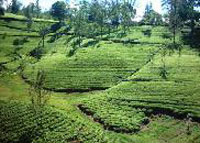
After breakfast we leaving for the Nanu Oya rail station, we will take the train to Ella, Ella is a beautiful small sleepy town on the southern edge of Sri Lanka’s Hill Country. It’s situated in the middle of beautiful countryside, with small vegetable plots in the valleys, tea plantations on the hill slopes and forests on the tops. You can enjoy the picturesque scenery in the hill country. We stay overnight in Ella at The View Hotel. 

DAY 6: Ella / Yala 

After breakfast we drive to the Ella waterfalls, A popular sightseeing attraction in Sri Lanka. It currently ranks as one of the widest falls in the country. This waterfall measures approximately 25 m (82 ft) in high and cascade from an oval-shaped concave rock outcrop. After we visit the waterfalls we proceed to Tissamaharama (Tissa), we stay there in the Hibiscus Garden Hotel. In the afternoon around 2:30 we will start the Jeep Safari in the Yala National Park. Elephants are the most often-spotted inhabitants of the Yala National Park in the southeast of Sri Lanka, east of Matara, but they share the reserve with 130 different species of birds and other creatures like sambhur, spotted deer, sloths, crocodiles, monkeys, wild boar and porcupines. There is also a small population of leopards. After the Safari around 7:30 we go back to the Hibiscus Garden Hotel. 

DAY 7: Yala / Galle / Hikkaduwa

After breakfast we will proceed to Hambanthota, Matara and Galle, Galle is the best example of a fortified city built by Europeans in south and southeast Asia, showing the interaction between European architectural styles and south Asian traditions. The Galle fort is a world heritage site and the largest remaining fortress in Asia built by European occupiers. When we arrived in Galle we will visit the Dutch fort, the Galle Museum, a old Dutch church and the British church. After we visit Galle we proceed and see the stick Fishermen sit on sticks while fishing in the traditional way. After this visit we proceed to hikkaduwa. Hikkaduwa is a small town on the south coast of Sri Lanka. It is located in the Southern Province, about 20 km north-west of Galle. We go with a glassbottom boat and watch the corals, if you like it you can go snorkeling. End of the day we will go back to your hotel which is booked by yourself.

Price for above tour is USD 1,200.00 for 2 persons. Tour includes two mineral water bottles/day, all break fast, hotels, train tickets and additional English speaking person. You have to bear all entrance ticket cost, sight seeing fee, lunch & dinner by yourself. All hotels stated in this website are 3 star hotels. If you wish to upgrade those into 4 star hotels we will charge USD 300.00 additionally for 2 persons. End of 7 days of this tour we also could reserve you a hotel at Unawatuna, Galle or Hikkaduwa area upon your request. Besides I’m maintaining a modern house for tourism in Unawatuna area. If you would like to feel real home stay feeling in Sri Lanka I could arrange my house at a rate of USD 25.00/day. House is fully equipped with 3 bedroom, veranda and kitchen. 

Home Stay (3 bedroom house)     $ 25.00/day
Food – 3 meals (2 persons)          $ 150.00/day
Travelling – Tuk Tuk                   $ 60.00/day
                – Van                         $ 100.00/day
Tours/person (Tuk Tuk)
Unawatuna beach                       $ 5.00
Galle/galle fort                         $ 10.00
Hikkaduwa beach                       $ 40.00
Spice Garden                              $ 50.00
Museum (Galle & Koggala)           $ 50.00
Dolphins – Mirissa sea                  $ 100.00
Turturls village                           $ 100.00
Ayurveda Massage                       $ 100.00

3 Days Tours


Kandy/Nuwara Eliya/Bentota – 3 days/2 nights 

Price for Minimum 2 pax
1 – 2 pax  USD .00 each (If single supplementary USD.00 applied)
3 – 6 pax  USD .00 each
7 & above pax USD .00 each


Option 01

Day 01


Meet and pick you from the Int’l Airport. Drive to Pinnawela Elephant Orphanage to witness a great number of Elephants over 100. Proceed toKandy and visit the Temple of the Tooth, Gem Museum & Lapidary and also the Royal Botanical Garden. Then an evening Cultural show featuring Sri Lankan dancers.
Night in Kandy 


Day 02


Early Drive to Nuwara Eliya and visit Horton Plain. Walk up to the World’s End.Optional visit to Hakgala Botanical Gardens. An Evening city tour.
Night in Nuwara Eliya 


Day 03
Depending on your flight schedule, transfer to Airport.


Option 02
Day 01


Meet and pick you from the Int’l Airport. Visit Pinnawela Elephant Orphanage, Temple of the Tooth in Kandy, and proceed  Nuwara Eliya. En-route visit a Tea Factory.
Night in Nuwara Eliya 
Day 02


Visit the Horton Plain and walk up to the World’s End. Drive via St. Clair water falls to Kithulgala and experience a level of 4 white water rafting at the Kelani River where the Oscar award winning movie “Bridge on the River Kwai ” was filmed. Proceed to Mount Lavinia.
Night in Night in Bentota. 


Day 03
Colombo City tour. Depending on your flight schedule transfer to Airport.


Option 03

Day 01


Meet and pick you from the Int’l Airport. Drive to Bentota and then a river cruise along the Bentota River where you will have the opportunity to see birds, Crocodiles and also mangroves
Night in Bentota 
Day 02


Early breakfast and proceed to Kithulgala and experience a level of 4 white water rafting at the Kelani River where the Oscar award winning movie “Bridge on the River Kwai ” was filmed. Evening at Castlereigh Cottages.
Night in Dick-Oya
Day 03
Transfer to Airport.


1 Day Tours

TOUR 01: RIVER SAFARI AND TURTLE FARM 
Madu River

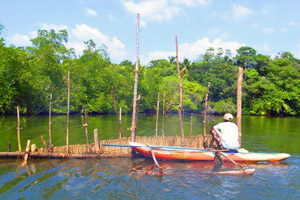
The Madu river , situated in the Galle District is a fitting example of the in tricate river channels which decorate sri lanka south west coast. in the global context the ecological importance of this site has garnered it the RAMASAR WETLAND status in 2003 being the second largest wetland in sri lanka with a colossal 915 hectares with 22 island inhabited by nearly 300 families. The Madu Ganga sanctuary is now a Tourist Development Area and a Special Area Managed ( SAM) By the coast conservation Department. Balapitiya is where the Madu Ganga makes is home. Along with the smaller Randombe Lake, to which it is connected by tow narrow channels, it forma the Madu Ganga wetland. its estuary and the many mangrove islets on it form a complex coastal wetland ecosystem. it has a high value in ecological, biological and aesthetic. significance home to 303 species of plants belonging to 95 families and to 248 species of vertebrates. Madu Ganga is possibly one of the last remaining tracts of pristine mangrove forests in srilanka. prawn farming stations also exist along the Madu Ganga Further along the way, another small islet described as satha pane Dupatha has nearly 800 years old Dewalaya but without a holy statue. koth Duwa has a temple which is called kothduwa Raja Maha Wiharaya. The main treasure of Madu Ganga is its mangroves that act as a bio-lock to the area by giving protection to the variety of aquatic plants and animal life. they provide a home for different kinds of aquatic plants, crabs, prawns,monkeys, king fishes, fish, eagles, cormorant, invertebrates and other animal life including crocodiles.

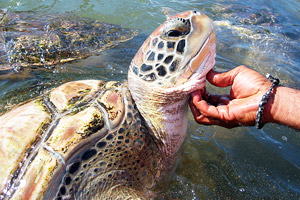
Turtle Farm

There are five varieties of Sea Turtles found in Sri Lanka, namely Olive Ridley Turtle, Loggerhead Turtle, Green Turtle,Hawksbill Turtle and Leatherhead Turtle. The all major nesting habitats are located in the Galle District (Bentota, Induruwa, Kosgoda, Thibbattawa, Ahungalle, Balapitiya and Unawatuna) and Hambantota District (Rekawa, Wellodaya, Kahanda modara, Walawemodara and Yala)

TOUR 02: ELEPHANT ORPHANAGE AT PINNAWALA

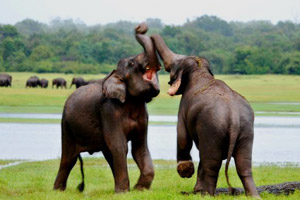
Pinnawala orphanage is situated northwest of the town Kegalla, halfways between the present capital Colombo and the ancient royal residence kandy in the hills of center Sri Lanka . It was established 1975 by the Sri Lanka wildlife department. This 24 acres large elephant orphanage is also a breeding place for elephant, plenty of elephants were born since 1984 and it has the greatest herd of elephants in captivity in the world 

TOUR 03: SAFARI ON YALA NATIONAL PARK 

Yala National Park is the most visited and second largest national park in Sri Lanka. Actually it consists of five blocks, two of which are now open to the public, and also adjoining parks. The block have individual names also, like Ruhunu National Park for the (best known) block and Kumana National Park or “ Yala East” for the adjoining area. It is situated in the south east region of the country, and lies in Southern province and Uva province. The park covers 979 square kilometers (378 sqmi) and is located about 300 kilometers (190 mi) from Colombo. Yala was designated as a wildlife sanctuary in 1990, and along with Wilpattu it was one of the first two national parks in Sri Lanka, having been designated in 1938. The park is best known for it’s variety of wild animals. It is important for the conservations of Sri Lankan Elephant and aquatic birds.

TOUR 04: KANDY 

Kandy is Sri Lanka’s charming hill capital and cultural city, situated 129 km east/southeast of Colombo and 465 m above sea level. The city was born in the 14th century and become the capital of the Kandyan Kingdom in the 16th century. The beautiful city, with its hills and valleys, rivers, lakes and cascading waterfalls, has its share of hallowed Buddhist, Hindu, Muslim and Christian shrines. Travellers who are sensitive to atmosphere will appreciate the very tangible peace, orientel style tranquility and charm of a nice, thriving up-country civilization. Unparalleled scenery unfolds over the Dumbara Valley, from the heights of Hantanewith its gorgeous scenery and views of mist covered tea plantations. Botnical Gardens, Elephant Bathing Places, Udawattakele, a path of jungle in the heart of the city, are other must-see tourist attractions, too. Kandyan Arts and Crafts, the work of skilled craftsmen, are for sale and you can even watch weavers, copper, brass and silversmiths at work. Among the many temples of kandy, the dalda maligawa or temple of the sacred tooth relic, is the lodestar of the Buddhists. Rituals to venerate the Relic are enacted everyday with flute and drum accompaniment. The Relic is honored publicly when the Esela Perahera (Procession of July/August) takes to the streets of the city.

TOUR 05: WHALES & DOLPHIN WATCHING 

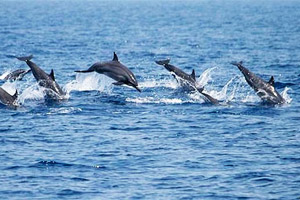
One of the best places in the world to see one of the only recorded resident blue whale colonies in their natural habitat. Dolphins are regularly spotted on whale watching trips organized from Mirissa and Dondra head on the south coast. The BBC documentary titled “Ocean Giants” featuring the mesmeric world of Whales and Dolphins, and the scientist’s effort to shed light on their habits and why they grow so large were filmed around Sri Lanka and according to them 30 Blue Whales were sighted in a single day.